In manufacturing, no single process is “best” for every application. Forging and casting both play important roles in modern metalworking. The key difference lies in what the tool needs to do once it’s in service, especially when strength, durability, and impact resistance matter.
At Council Tool Company, forging has long been our process of choice for hand tools, not because casting is inferior in all cases, but because forging offers specific advantages that align with how our tools are used in the real world.
-Understanding the Two Processes-
Casting produces a part by pouring molten metal into a mold and allowing it to cool. This process excels at creating complex shapes and internal features, often with lower tooling costs for intricate designs.
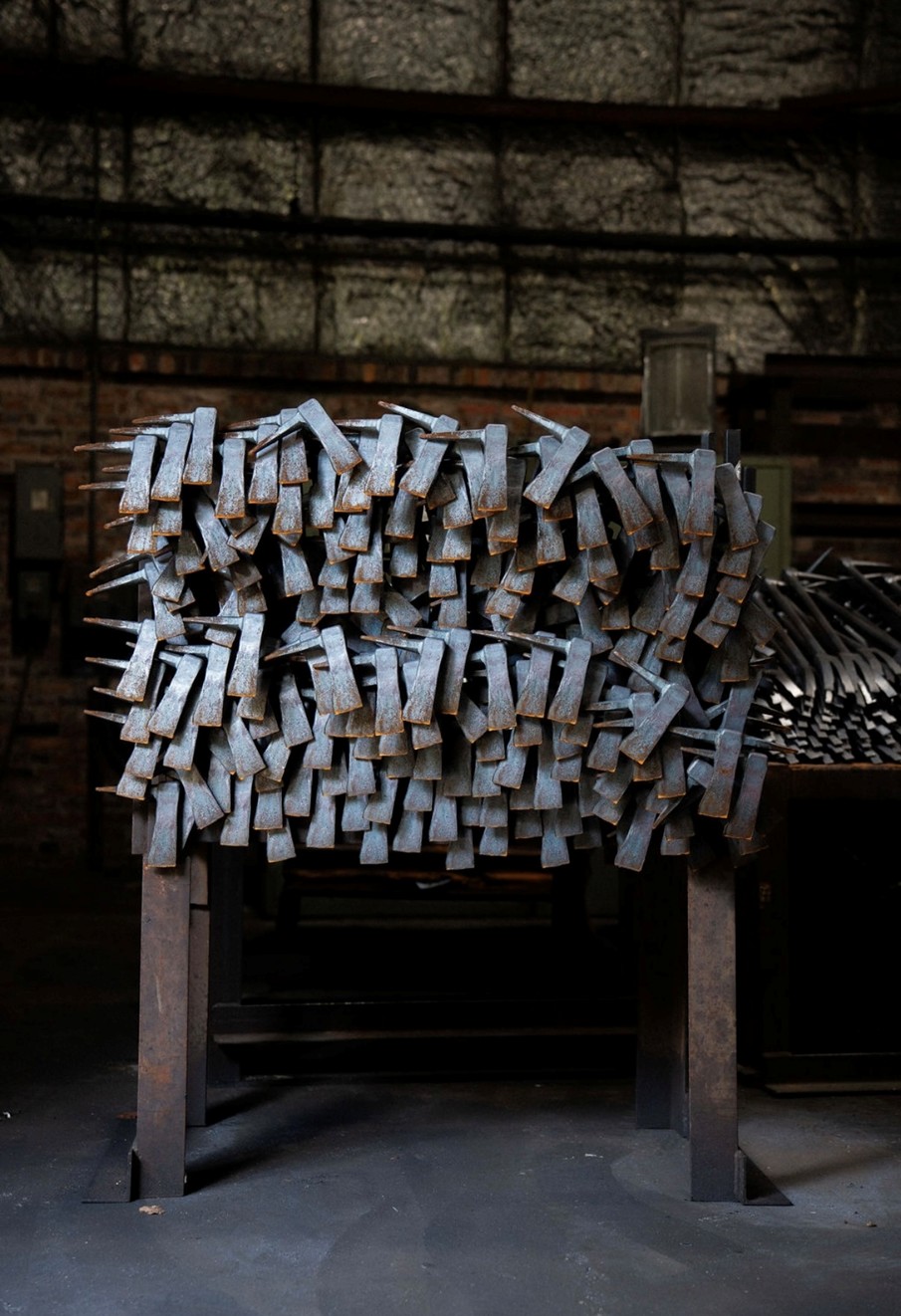
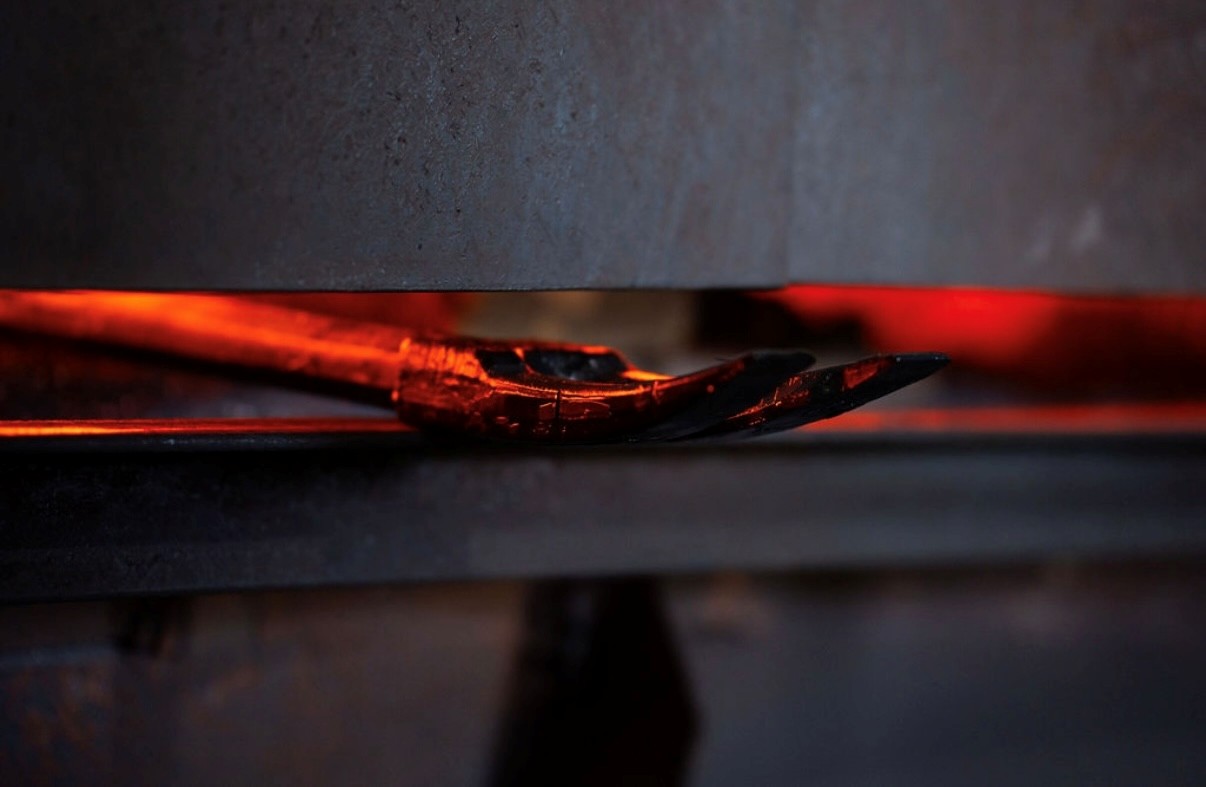
Forging, by contrast, shapes solid metal using compressive force while the material is hot. Rather than flowing as a liquid, the metal is mechanically worked into shape, altering its internal structure in the process.
Both methods can produce functional parts, but the internal structure they create is fundamentally different.
-Strength and Grain Structure-
One of forging’s most well-documented advantages is grain flow alignment. During forging, the metal’s grain structure is refined and oriented to follow the contours of the tool. This continuity improves resistance to cracking, impact, and repeated stress.
Cast parts, while dimensionally accurate, tend to have a more random grain structure. This does not make them weak by default, but it does mean they are generally less tolerant of shock loading and fatigue, which are common stresses in striking and chopping tools.
-Internal Soundness and Reliability-
Casting can introduce internal characteristics such as porosity or shrinkage as molten metal cools. Modern foundries work hard to control these effects, and many cast components perform very well in appropriate applications.
Forging, however, compresses the metal during shaping. This mechanical working reduces internal voids and produces a denser, more uniform structure. The advantage when failure is not an option and tools are expected to endure years of repeated use.
-Where Casting Makes Sense-
Casting remains an excellent choice for:
-Highly complex geometries
-Components requiring internal cavities
-Large structural parts where impact loading is minimal
-Applications where cost or weight is prioritized over toughness
In these cases, casting can be the most efficient and practical solution.
-Why Forging is Preferred for Hand Tools-
Hand tools- namely striking tools…experience repeated impacts, bending forces, and occasional misuse. In these conditions, forged steel generally provides:
-Greater impact resistance
-Improved fatigue life
-More predictable failure behavior
-Longer service life under demanding use
These characteristics align closely with the expectations of tradespeople, firefighters, and land managers who rely on their tools daily.
-Process with Purpose-
At Council Tool, forging isn’t used because it’s traditional, it’s used because it meets the job demands. For tools that must withstand shock, abrasion, and long-term field use, forging offers advantages that justify its continued use generation after generation.
Further Reading:
–ASM International. Introduction to Forging Processes and Applications. Overview of open-die, closed-die, and press forging, with emphasis on grain flow and mechanical properties.
–Forging Industry Association (FIA). Forging Design Guidelines. Practical explanations of why forging improves fatigue life, impact resistance, and structural integrity.
–Kalpakjian, S. Manufacturing Engineering and Technology. Widely used engineering text covering casting, forging, and forming processes with comparative performance data.
–Dieter, G. E., & Bacon, D. J. Mechanical Metallurgy. Foundational discussion of deformation, grain refinement, and failure mechanisms in metals.
–American Foundry Society (AFS). Metalcasting Fundamentals. A balanced look at where casting excels, limitations of cast structures, and modern foundry controls.