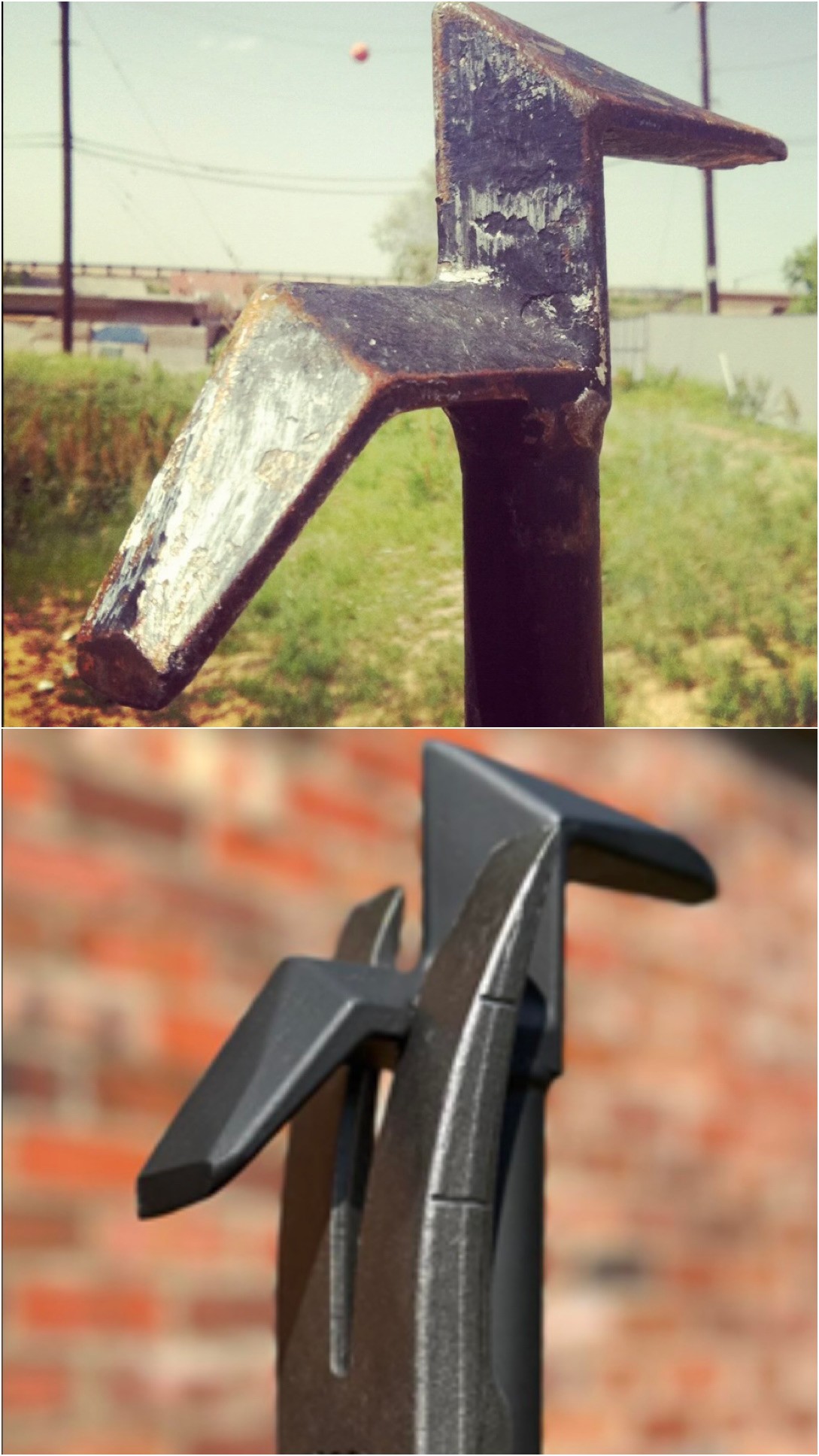
Some tools earn their reputation through clever engineering. Others earn it through years of proving themselves on the fireground. The New York Roof Hook, often called the Halligan Hook, did both. Created in the 1940s–50s by FDNY Deputy Chief Hugh Halligan, the same mind behind the Halligan Bar, this hook was designed to solve real problems firefighters were running into in New York’s dense urban buildings. Halligan understood that firefighters needed a long, sturdy tool that could reach, pry, sound, pull, and open up the old-school construction that defined the city.
-A Brief History-
Before the Roof Hook, firefighters relied on simple hooks that worked fine for basic overhaul. However, struggled against the layered roofs, lathe-and-plaster ceilings, and void-rich walls of mid-century NYC. Halligan’s innovation was to take the idea of a fire hook and elevate it: angled working ends, improved leverage, and a shaft long enough to keep firefighters efficient and safe during rooftop ops and overhaul. Over time, it became a standard across the FDNY, then a national staple, known for being brutally simple, brutally effective, and brutally reliable.
-Design That Changed the Game-
The hallmark of the original New York Roof Hook is its two distinct heads, each serving a purpose:
–90° Hook: Born for pulling, prying, and ripping. Ideal for opening ceilings, removing tin, or finding hidden fire.
–45° Chisel/Adze End: Excellent for leverage, sounding, striking, and creating openings. Especially when working from roofs or clearance-limited spaces.
-A Tool Built for Urban Firefighting-
Its rise wasn’t an accident. The design made it essential for:
–Ventilation: Tearing through ceilings and walls to release heat and smoke or expose fire hidden in voids.
–Overhaul: Digging into every nook after knockdown to ensure nothing’s still burning.
–Prying & Forcible Entry: Acting as a lever or a fulcrum, especially paired with a Halligan Bar.
–Rooftop Operations: Sounding decking for safe travel, pulling built-up roofing, and creating vent openings.
–Search & Access: Checking voids, punching through weakened materials, or quickly clearing obstacles.
Whether in a Bronx tenement or a modern commercial flat roof, the hook earned its place through adaptability and capability.
-Forging an Icon: Council Tool/COUNCIL FIRE New York Style Roof Hook-
At Council Tool, we believe that icons don’t need to be reinvented, just respected and refined. Our New York Roof Hook line keeps the spirit of Halligan’s proven design, but upgrades the performance for today’s firefighters.
We offer the hook in 4, 5, and 6-foot lengths, each built on a drawn-over-mandrel (DOM) steel tube for the ideal blend of carry weight and structural strength. The business ends stay true to the classic shape, but we’ve sharpened the performance:
–Sharp tip or beak on the top hook for fast tempered window and auto-glass access.
–Narrow chisel end that cleanly slides through a standard ladder rung, because efficiency matters.
–Patent-pending marry slot forged directly into the head so you can lock it in with your Halligan and move your irons as one.
This isn’t just a reproduction, it’s a modernization built for the realities of today’s fireground, made in America, and built to last.
—————————————————————————
Sources:
-“NY Roof Hook – Firefighter Survival Worldwide.” Richardsville Fire Department (PDF).
-“The History of the New York Firefighter Hook – A Legacy of Innovation and Service.” We Like Firefighting.