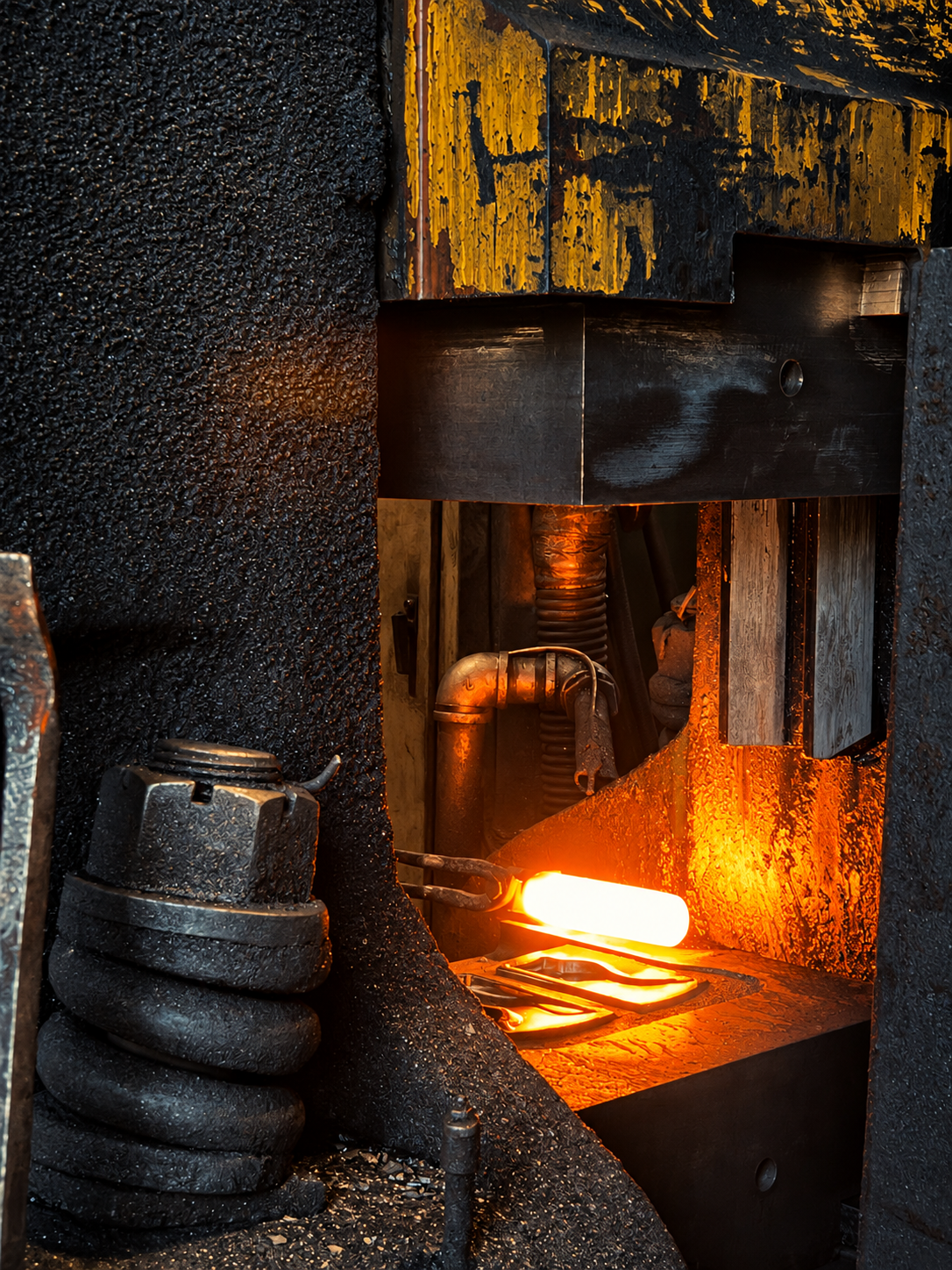
The shape of a tool tells only part of its manufacturing story. Its internal structure matters, too.
Kicking off Forging Friday: a closer look at the processes and people behind Council Tool’s American-made tools.
We’re starting with the foundation: why forging?
In hot forging, solid steel is heated until it can be worked, then shaped under compressive force between dies. We use induction heat and heat the steel billets to around 2,100 degrees to make it pliable.. Unlike casting, the steel is not melted and poured into a mold. Unlike machining a complete head from bar or plate, forging moves material into the desired shape.
That distinction has practical advantages:
• Forging can refine the steel’s internal structure and reduce internal porosity associated with casting (Fine grain structure).
• Forging helps the steel’s internal grain follow the tool’s shape, making it better able to withstand hard hits and repeated use.
• Forming a head close to its finished shape can reduce the material removed compared with machining it entirely from larger stock.
Machining remains a valuable manufacturing process—including for finishing forged components. Forging builds strength into the steel before the final shaping and finishing steps.
For tools subjected to repeated impacts, those properties matter. Steel selection, heat treatment, design, and quality control all help turn that foundation into dependable performance.
As Council Tool marks 140 years of American toolmaking, we’re opening the door to more of the work behind the tools.